


Community Matters: Identity, imagination and energy innovation
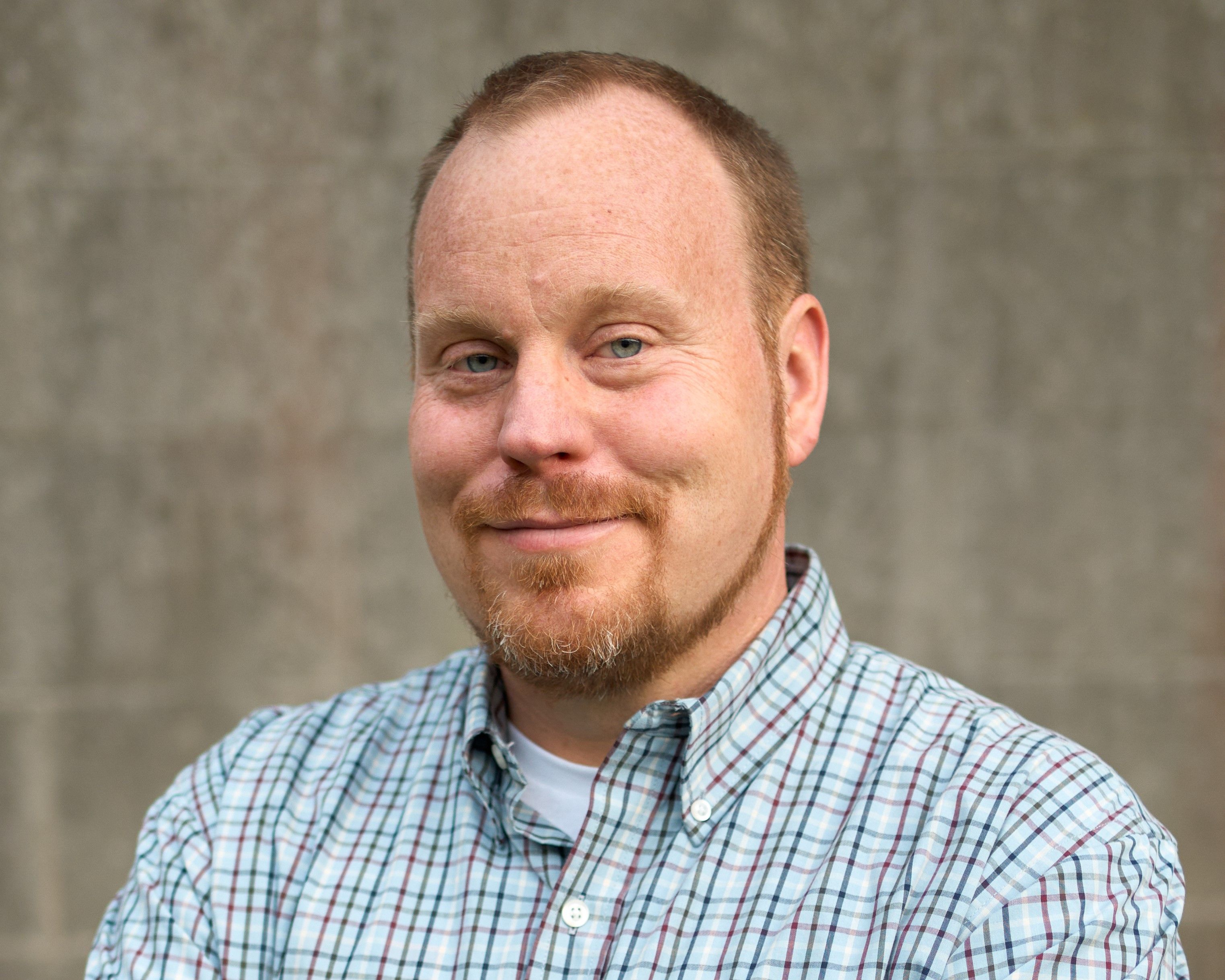
Daniel Rossi-Keen
November 4, 2025
*** The following essay was originally delivered on October 30, 2025 in Minneapolis, MN at the Annual Convening of the Just Transition Fund.
I grew up in the 1950s in the 1980s.
That’s an odd sentence. So, let me say it again.
I grew up in the 1950s in the 1980s.
My hometown of Clearfield was, and very much still is, a small, rural community in western Pennsylvania.
There are lots of ways I could describe my hometown. Small. Inviting. Safe. Home. These and many other words come to mind when I think about the community where I was privileged to be born and raised. In 1966, Clearfield was one of the winners of the All-America City Award, given annually to the top ten cities in the United States.
Though my childhood spanned the 1980s, Clearfield was blissfully “behind the times.” As residents, we knew this. We joked about it. We also sometimes lamented it. The youth were particularly frustrated by the backwardness of my hometown. So, it was common to hear my peers talk in excited ways about “getting out” and “moving on.” And yet despite such talk, deep down in the guts of the community, most residents carried with them an unspoken pride about our stubborn commitment to an older and slower way of life.
Though I had little reason to think about such things as a kid, it turns out that my hometown is also an energy community, with a long connection to coal mining, energy production, and all the other bumps and bruises that come with being a rural energy community over the last century.
One of the most vivid memories from my childhood is from an otherwise unremarkable day when my dad took me on an impromptu tour of the local power plant where he worked. He had forgotten something at the end of his shift, and asked if I wanted to tag along to retrieve what he forgot. So off we headed to the power plant in a beat up Buick LeSabre my dad bought from his father for a dollar.
For decades, my dad was a proud member of the International Brotherhood of Electrical Workers. IBEW 459. I can still remember the hats he wore, tagging him as a member of the brotherhood.
For most of my childhood, my dad was part of what is called a “mobile maintenance crew.” This crew was a division of the Pennsylvania Electric Company. Though stationed near my hometown at the Shawville Generating Station, my dad regularly traveled throughout Pennsylvania, bouncing from one facility to another, maintaining an endless network of conveyor belts, scrubbers, turbines, and generators.
My dad came from a long line of similar folks. Plumbers and pipefitters mostly. In a way that I find poetic, my grandfather was a boilermaker who built the plants that my dad would eventually service. Mostly my dad worked to maintain coal fired plants. But he also worked on gas-fired and hydro facilities. He even did a stint at Three Mile Island. With a radiation counter hanging around his neck, and wrapped in layers of protective gear, my dad worked on the one unit that remained intact after our nation’s largest nuclear disaster.
As I think about my tour of Shawville Generating Station, I can remember driving into the plant. I recall driving through the security checkpoint and thinking how special my dad must be that the security guard would let him through with only a smile and familiar nod.
In my mind’s eye, I can see my dad explaining how the huge mountains of coal came from an endless stream of railcars. He explained that the coal was dumped out, sent up a conveyer belt, and crushed into a fine powder before eventually being blown into an enormous furnace.
Inside the plant, he showed me a boiler and explained how the powdered coal was burned to turn river water into steam. He pointed out the intricate network of pipes that lined the inside of the boiler, each pipe containing water becoming steam that, once at the proper pressure, would be converted into mechanical power by turning enormous turbines which rotated the generator.
We walked alongside a row of such turbines — loud, shrouded humps of metal, each whirring inside and turning a huge rotor. My dad explained how the wisdom of the universe was displayed inside such machines, and how a deceptively simple dance generated the electricity that powered our homes, our businesses, our nation, and our identity as a people.
I don’t think I understood it very well at the time. But as I grow older, I am now able to recognize a sense of pride and dignity in the work my dad did. It was hard, punishing work. It aged him prematurely and left his body in perpetual pain. During an outage, he regularly worked more in 6 months than many men worked in a year. The stress of work undoubtedly contributed to a massive heart attack at the age of 44. Beyond all odds, he miraculously survived thanks to divine favor, a helicopter ride to Allegheny General Hospital, and the wonders of modern medicine.
And then, within a few short months, he returned to work at the power plant.
Reflecting on this core childhood memory, I can now understand that the complex machine of the power plant wasn’t just a series of complicated gadgets strung together. Yes, these plants were a marvel of human ingenuity and American industry. But, more fundamentally, I have come to recognize that the power plants my father dutifully maintained stood as a tangible manifestation — and industrial monument of sorts — to an entire way of life.
In my early 20s I moved away from Clearfield County, never imagining that I would one day work to help bring about a just energy transition. Yet somehow, nearly four decades removed from my first impromptu power plant tour, I find myself working to prepare communities to participate in the future of energy production and innovation.
For the last decade and a half, I have lived just north of Pittsburgh in the rust belt community of Beaver County, Pennsylvania.
Beaver County is ground zero in all things related to the energy transition. We are home to the first nuclear plant in the nation. We recently experienced the closure of the Bruce Mansfield Power Plant, which is now being rapidly converted into a gas fired facility that will power a data center. Because we sit atop the Marcellus Shale formation, we are surrounded by numerous fracking operations. This also means we are central to conversations about future hydrogen hub development. Since 2011, we have become home to Shell Polymers, one of the largest American industrial facilities built in recent memory. And, we are home to a network of pipelines that travel under our feet, delivering petrochemicals throughout the region and beyond.
As executive director of a nonprofit organization called RiverWise, I have spent most of the last 15 years trying to understand how places like Clearfield and Beaver County can come to terms with the many changes that a national energy transition is producing. Much of that work focuses on rebuilding the social fabric of my community so that it can become more resilient, less dependent on outside forces, and better able to exercise agency over its own future.
With these goals in mind, I started a community bookstore, created plans and secured funds to build a community park, and helped to launch a children’s museum. My organization is also working to create better coordination in our regional food system. We support a growing network of local artists. And we lead extensive community outreach, education, and organizing efforts about a range of community issues.
Over the years, RiverWise has helped to guide community conversations about national and global forces that shape places like Clearfield and Beaver County. We have produced documentaries. First about the building of Shell’s $15 billion ethylene cracker facility in the heart of our community. Since February of 2023, we have been documenting the ongoing story of Norfolk Southern’s East Palestine Train derailment, which took place only 600 feet from the Beaver County line. We engage in intentional thought leadership about issues facing our communities, launched a community storytelling network, and are reinventing local journalism in a way that can best serve our residents.
More recently, RiverWise has been supporting a series of energy related projects. Some of this has involved planning work, like when we developed a plan to solarize all municipal assets for a local community. Lately, we have been engaged with renewable energy companies who are interested in providing community benefits as part of new development projects. And, thanks in part to funding from JTF, RiverWise initiated The RISE Project, an initiative that was twice funded by the US Department of Energy to rapidly accelerate solar adoption in seven rural communities in Beaver County. As part of the RISE Project, we are solarizing a public high school, a municipal complex, and a children’s museum.
Although I never set out to do work related to the energy transition, I have become inescapably enmeshed in a community whose story has been shaped for generations by energy related issues. Beaver County — and places like it — aren’t just IN an energy community. Places like Beaver County ARE an energy community. Through and through, whether they realize it or not. The creation, deployment and utilization of energy resources has been so very central to their identity that — like a fish in water — they often don’t realize that it is the medium in which they live.
Along the way, I would like to think that I have learned a thing or two about what it means to be part of an energy community. Many of those learnings have come through failure, pain, and embarrassment. Over time, I have come to understand that bringing about a just energy transition requires WAY more than just building power plants, decentralizing energy production, reshaping policy, or incentivizing innovation. At its core, a just energy transition requires nothing less than a revolution in the hearts and minds of people like my father, his father, and their union brothers and sisters who, through generations of inculturation, have come to understand the production of energy as a way of life.
To a generally progressive 48 year old like me, a solar panel seems like a cool new kind of technology that can provide hopeful opportunities for energy communities. But, for people like my father, a solar panel is decidedly not a value neutral piece of technology. It is instead an admission that a way of life once so central to his story has reached its apex. It is a reminder to people like my father that the kind of working class people from which he descended are no longer required in the same way to fuel our national story. To my father, such innovations are not primarily an emblem of progress. They are instead monuments of loss. Not beacons of hope, but harbingers of the end of an identity.
It’s taking time and discipline, but I am slowly coming to realize that I must become more understanding, more shrewd, and more compassionate about just how revolutionary a just energy transition will be for so many good and noble people. People like my dad, my uncle, and my brother (who followed in my dad’s footsteps and now works at those same powerplants my dad once maintained). I have come to realize that one of my primary jobs in this growing movement is to enliven their imagination and fuel their desire for something different.
One way or another, I am convinced that an energy transition will happen. In fact, as you all understand, it is already well underway. For me, the question is whether such a transition will happen TO communities like mine or WITH them. In my humble sphere of influence, I am doing what I can to ensure it’s the latter of those two options. I’m working to remind others that this important work requires all of us—those who understand solar technology and those who understand how a turbine works, those who see the urgency and those who feel the loss. Because ultimately, a just transition isn't only about changing what powers our grid—it's also about ensuring that this transition powers our communities into fuller, more vibrant, and healthier places where all residents can thrive for generations yet to come.
Daniel Rossi-Keen, Ph.D., is an author, speaker, entrepreneur, and community development advocate. He is the executive director of RiverWise, a nonprofit focused on organizing community voice and power so that residents can reclaim agency over the future of Beaver County. Daniel’s writing is featured regularly in “The Bridge,” a publication containing curated news and original stories for, by, and about residents of Beaver County. You can reach Daniel at daniel@getriverwise.com.